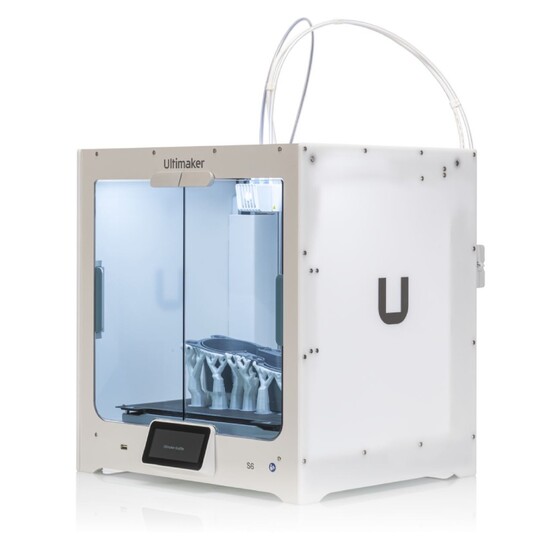
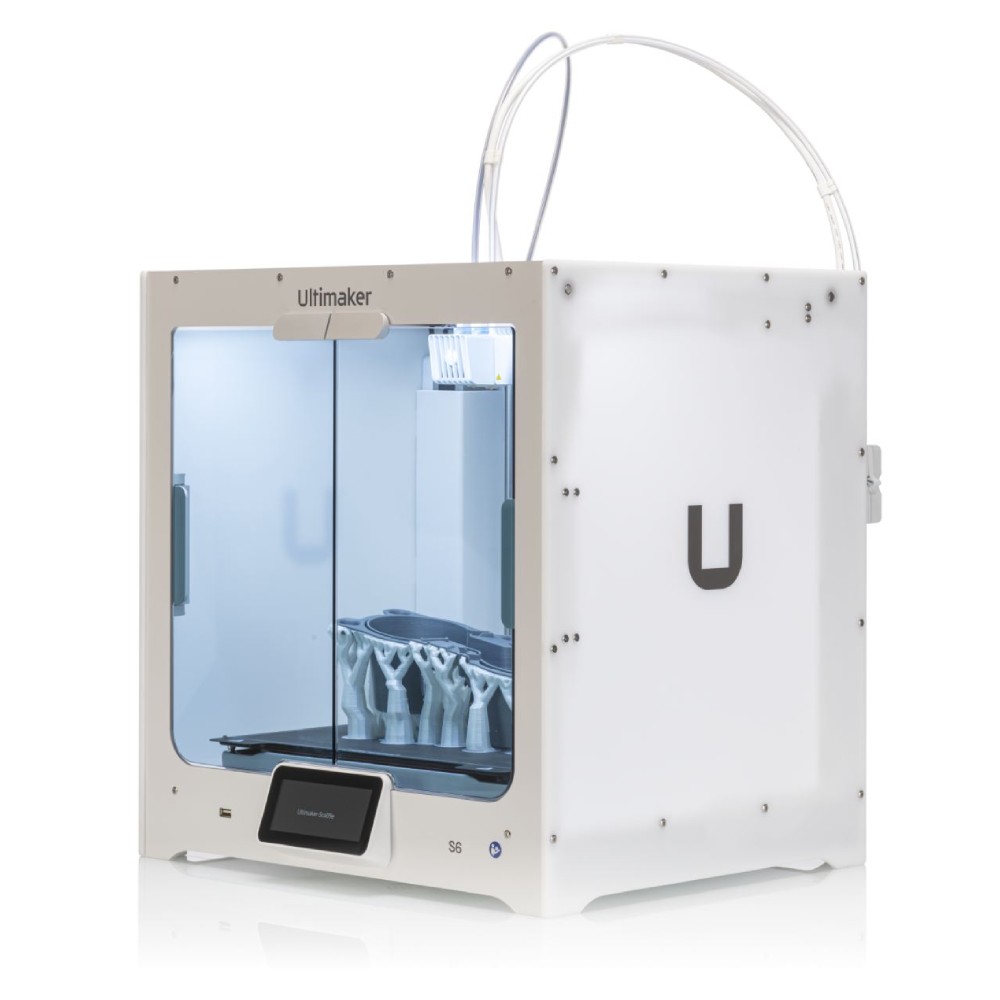
UltiMaker S6 Secure Cybersecurity Protected 3D Printer
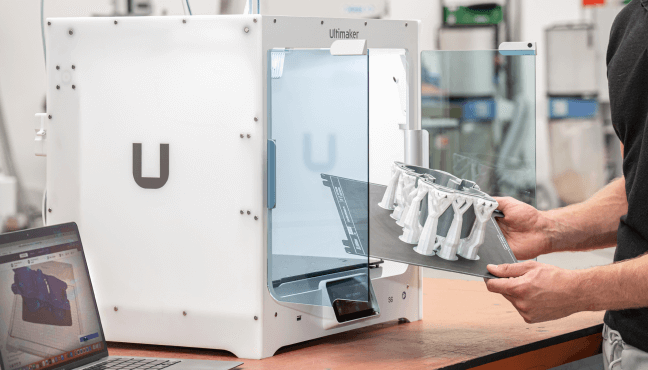
The industrial 3D printing market is rapidly evolving: equipment reliability and precision are now complemented by strict requirements for digital data protection and complete manufacturing independence. The response to these challenges is UltiMaker's specialized Secure lineup, with its flagship solution being the **UltiMaker S6 Secure**. This device is designed for organizations operating in environments with elevated high-security and standardization standards—such as critical infrastructure facilities, government agencies, and enterprises with strict internal compliance. In this review, we will analyze the model's key features, its architecture, and the feasibility of integrating it into modern production chains.
Concept and Market Positioning
When developing the Secure series, UltiMaker engineers focused on the concept of localized on-demand manufacturing for organizations where any information leaks are critical. The primary focus is on isolating the equipment from external digital threats and ensuring its ability to function in remote or closed locations.
Key elements of this approach include:
Air-gapped environment: A complete absence of Wi-Fi modules and cloud services; print jobs are transferred exclusively via secure local connections (LAN or USB).
Secure hardware firmware: A closed architecture that prevents unauthorized modification of the system software.
European manufacturing: Assembly and quality control are conducted in the Netherlands, in strict compliance with the highest European regulations.
Logistical independence: Designed to operate in regions or facilities dealing with scarce or unstable external supply chains.
Because of this, the UltiMaker S6 Secure is perceived not just as another prototyping printer, but as a highly secure element of corporate IT and manufacturing infrastructure.
Key Technological Advantages
Uncompromising Cybersecurity and Data Control
The main distinction of the S6 Secure version lies in creating a secure perimeter around the printing process. Organizations working with unique engineering designs, patents, or sensitive technical documentation receive a guarantee of zero risks. The absence of a camera, wireless communication modules, and third-party app support turns the printer into a self-sufficient, highly secure node.
Economic and Logistical Autonomy
The ability to produce necessary components on-site significantly reduces reliance on global supply chains. For remote enterprises, research stations, or production complexes with complex logistics, this minimizes the risks of prolonged downtime in the event of component delivery delays.
Continuity of a Proven Platform
Despite its unique secure internals, the printer is based on the reliable and well-tested UltiMaker S series platform. This eliminates the risks associated with using "raw" experimental technologies — the user gets familiar, rock-solid hardware stability augmented by multi-layered data protection.
Wide Range of Materials for Real-World Tasks
The device's architecture is designed to work with a wide variety of engineering plastics and composites. This allows for the creation of not only visual mockups but also fully functional parts, mounts, enclosures, and working tools for internal enterprise needs.
Target Application Sectors
The S6 Secure model is aimed at institutions and companies where reliability and confidentiality are paramount:
Critical infrastructure enterprises: Energy facilities, transport hubs, and utility companies where downtime due to waiting for spare parts is unacceptable.
Research centers and laboratories: Institutions conducting classified or commercially sensitive R&D that require complete isolation of internal processes from the internet.
Aerospace and high-tech industry: Sectors with a high cost of error and strict access control to blueprints and designs.
Government and municipal structures: Institutions subject to rigorous security audits requiring certified European equipment.
Enterprise Implementation Features
Integrating such equipment requires a systematic approach. It typically involves auditing the enterprise's internal security protocols, configuring local network channels, and approving a list of permitted engineering plastics. The manufacturer pays special attention to long-term support: UltiMaker guarantees the availability of original spare parts and service maintenance for a horizon of 5–7 years, making the purchase a sound long-term investment in manufacturing security.
Conclusions and Value Proposition
The UltiMaker S6 Secure is a niche yet highly demanded product for markets with elevated corporate security standards. The main advantage of the model lies in the synergy of a time-tested 3D printing platform and modern data isolation systems. If your organization faces external logistics constraints or requires absolute control over digital projects in production, the S6 Secure is poised to become an effective tool for ensuring uninterrupted, secure autonomous operation.
We use cookies and other tracking technologies to improve the website, personalize content, and analyze traffic. You can adjust your settings in the settings.
Necessary cookies enable core functionality of the website. Without these cookies the website can not function properly.
Statistic cookies help website owners to understand how visitors interact with websites by collecting and reporting information anonymously.
A set of cookies to collect information and report about website usage statistics without personally identifying individual visitors to Google.
Marketing cookies store user data and behavior information, which allows advertising services to target more audience groups.
We use cookies and other tracking technologies to improve the website, personalize content, and analyze traffic. You can adjust your settings in the settings.
Necessary cookies enable core functionality of the website. Without these cookies the website can not function properly.
Statistic cookies help website owners to understand how visitors interact with websites by collecting and reporting information anonymously.
A set of cookies to collect information and report about website usage statistics without personally identifying individual visitors to Google.
Marketing cookies store user data and behavior information, which allows advertising services to target more audience groups.