Multi-colour 3D printing with four independent extruders
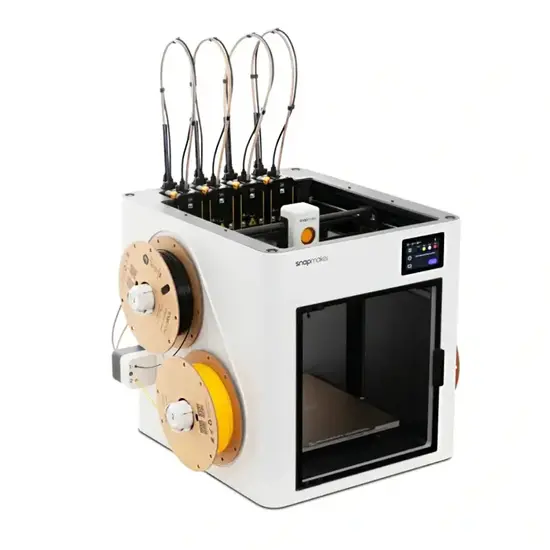
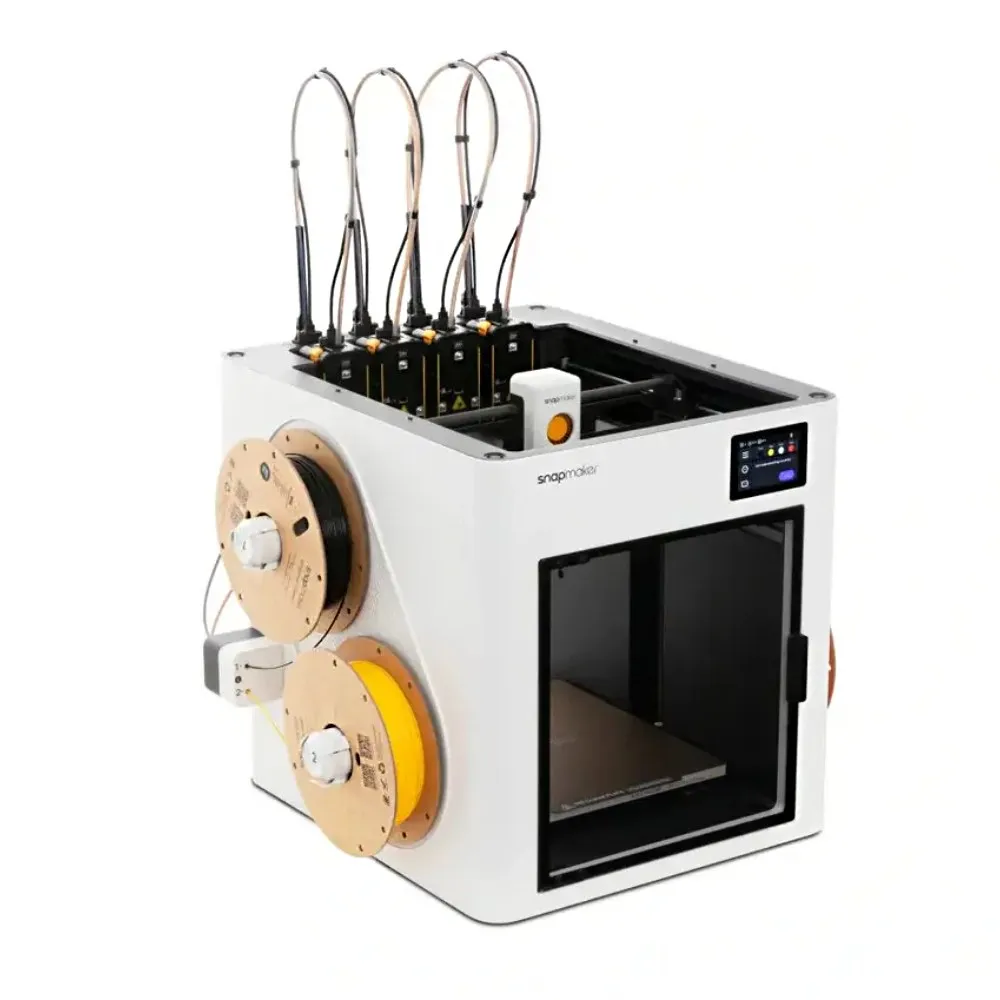
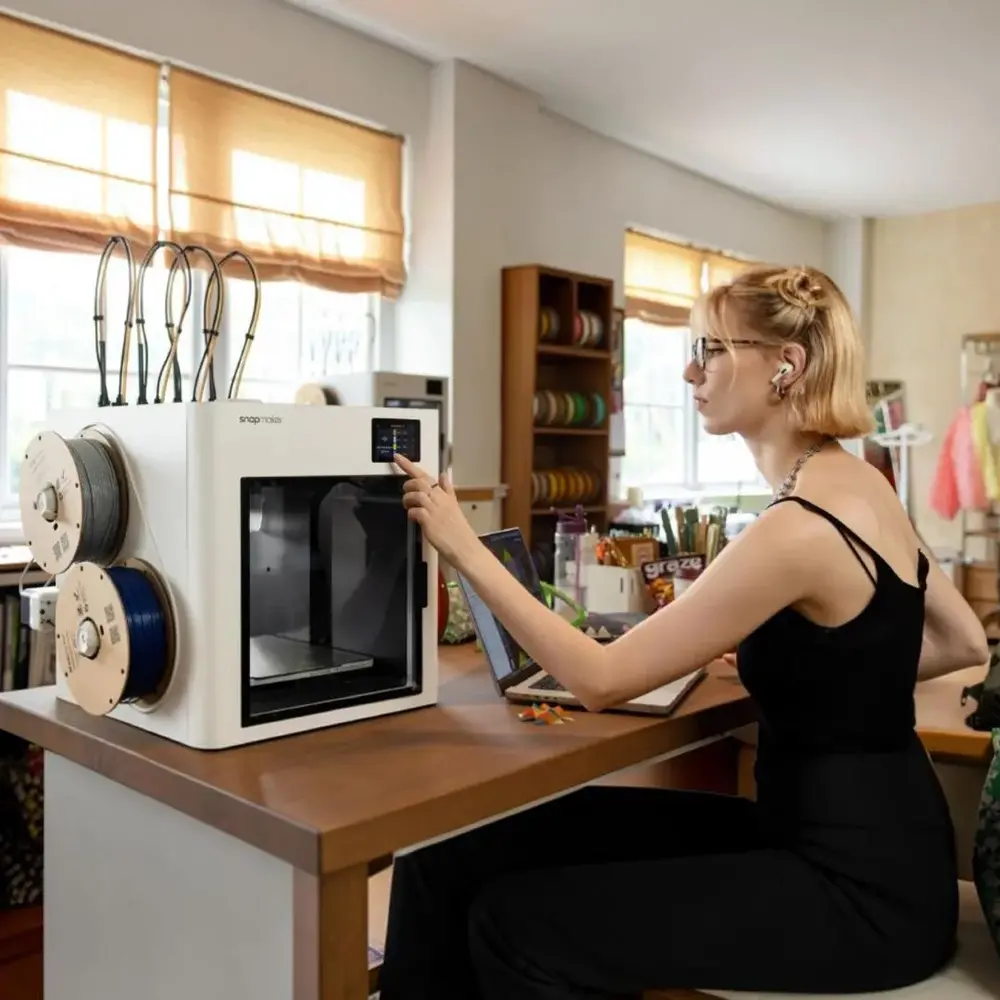
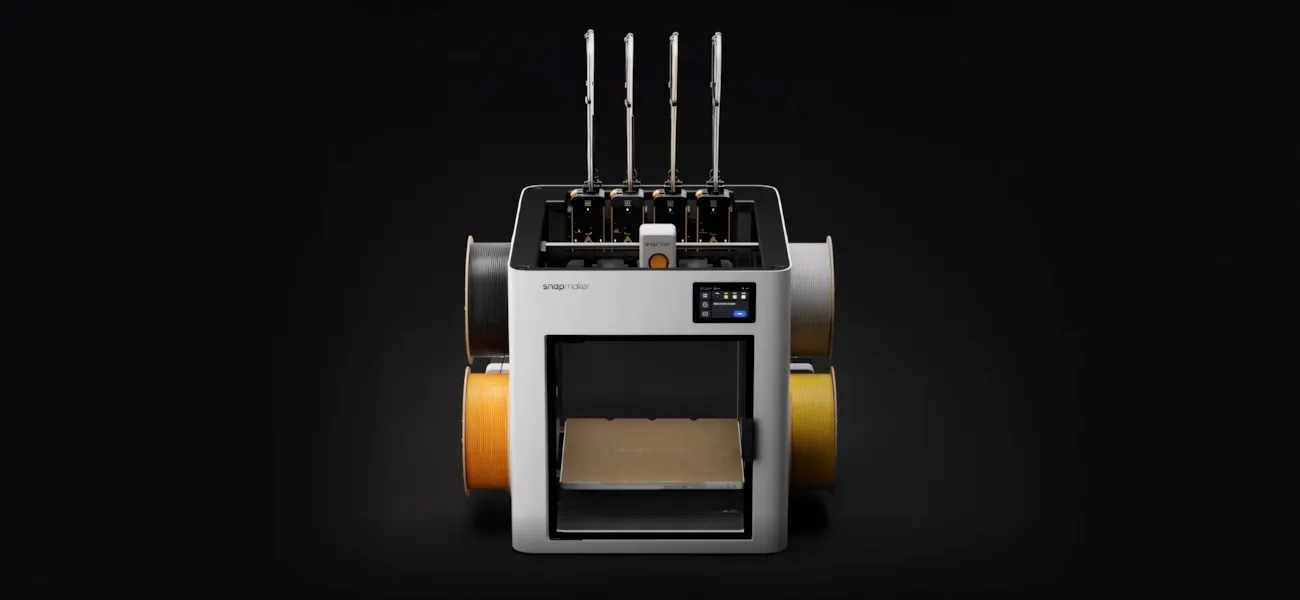
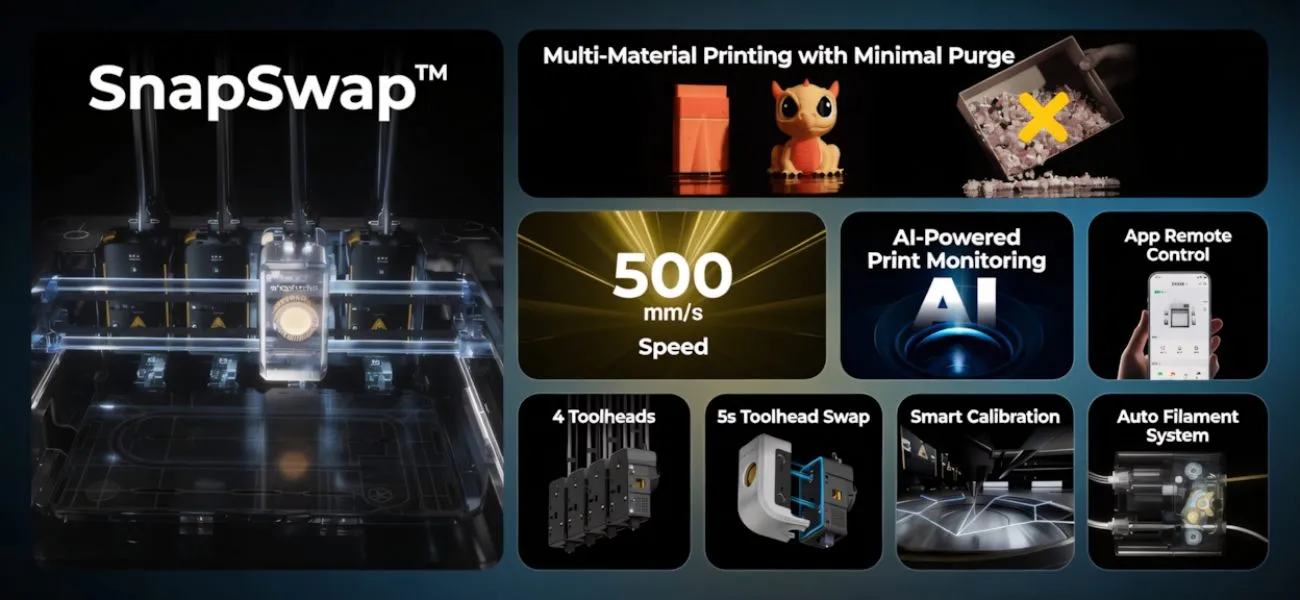
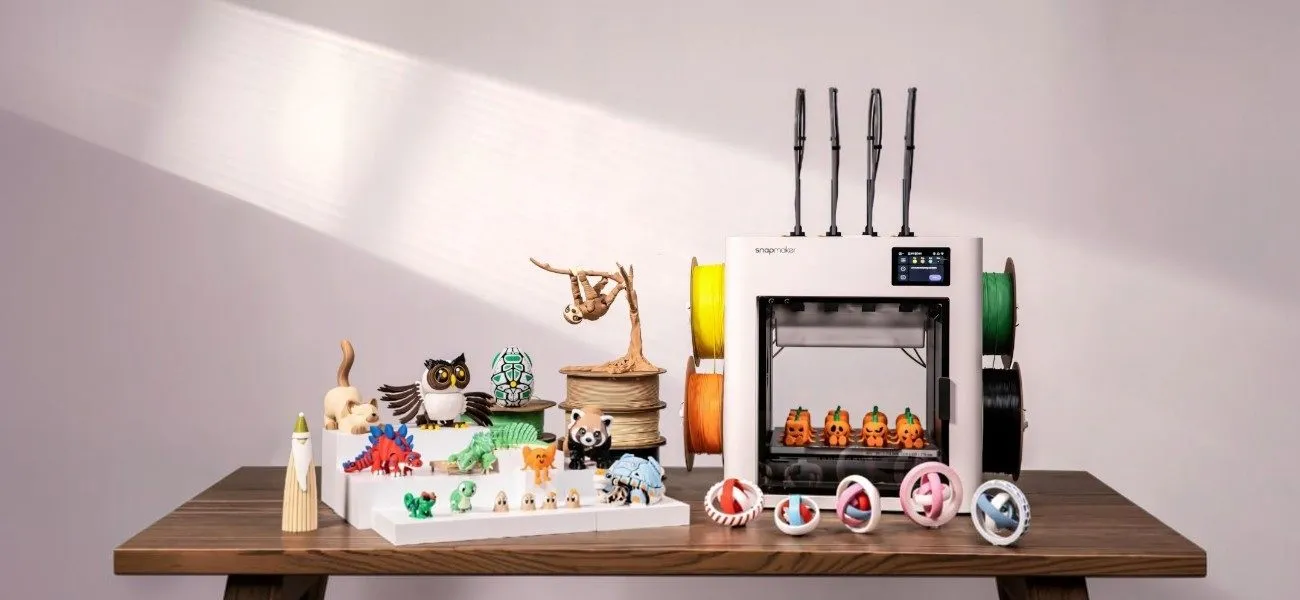
Snapmaker U1 is a multi-colour 3D printer featuring four independent print heads and the SnapSwap automatic toolhead changing system. Unlike single-nozzle printers, the U1 switches between materials without lengthy extruder purging, reducing filament waste and print time. CoreXY kinematics delivers speeds of up to 500 mm/s, while the 270 × 270 × 270 mm build volume allows you to produce functional prototypes, complex mechanisms, and multi-colour objects. The automatic print head changing system transforms the workflow. Instead of repeatedly loading and unloading filament, each extruder works with a dedicated material. This reduces process waste and makes it possible to print models in multiple colours or compatible materials within a single job.
Advantages of the Snapmaker U1 3D printer
Minimal material waste during colour changes. Four independent print heads eliminate the need for lengthy purging of a single nozzle between transitions. According to Snapmaker comparative tests, filament waste in certain scenarios can be just 17–47% of the amount required by a single-nozzle printer.
Fast switching between materials. The SnapSwap system swaps the print head in approximately 5 seconds, shortening process pauses during multi-colour printing.
High productivity. CoreXY kinematics supports travel speeds during printing of up to 500 mm/s and acceleration of up to 20 000 mm/s², which allows model manufacturing times to be reduced.
Precise positioning of print heads. Automatic calibration with an accuracy of up to 0.04 mm helps align the positions of the extruders for printing multi-colour models.
Compatibility with various filaments. A nozzle temperature of up to 300 °C and bed heating of up to 110 °C allow printing with PLA, PETG, TPU, and other materials according to required printing conditions.
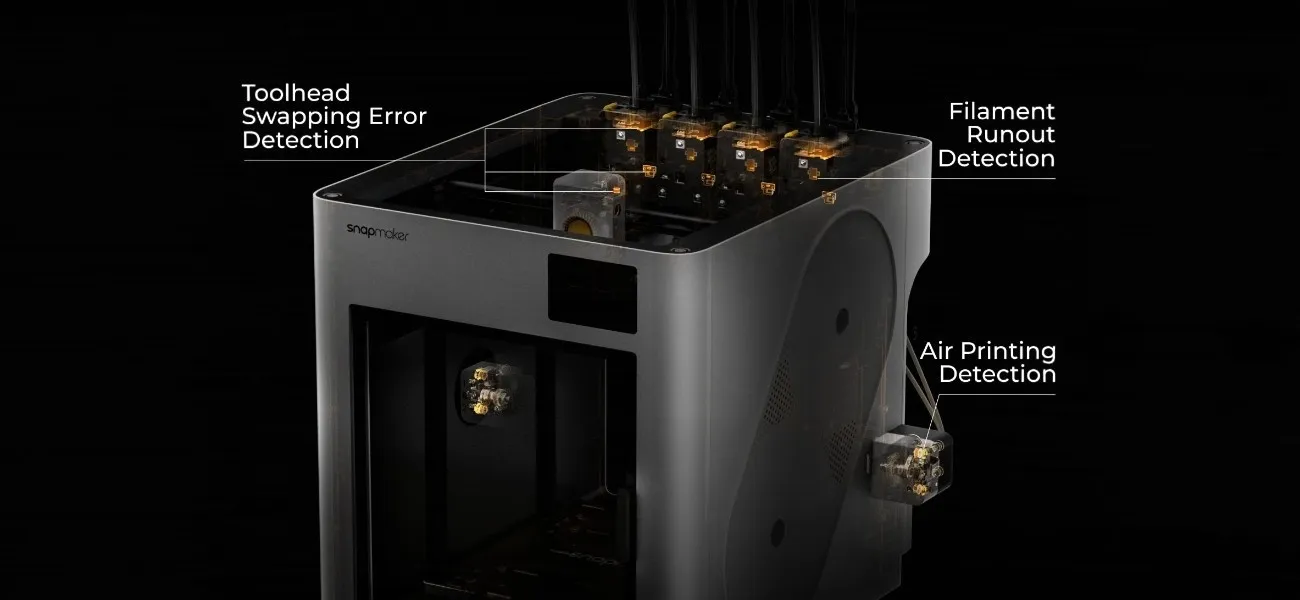
Print process monitoring. A camera with automatic error detection features and filament status sensors help respond promptly to faults during part production.
CoreXY kinematics for high-speed 3D printing
The design of the Snapmaker U1 is built on a CoreXY kinematic system that provides fast movement of the print head in the horizontal plane. The maximum print speed is 500 mm/s, and acceleration reaches 20 000 mm/s². Actual performance depends on the model geometry, filament type, layer height, and selected print settings. The X-axis is equipped with carbon fibre linear rails. Their low mass helps reduce inertial loads during rapid movements, which is crucial for accurately forming outlines and fine details. The 270 × 270 × 270 mm build volume is suitable for producing enclosure parts, functional prototypes, assembly components, and small production runs. The all-metal frame provides the mechanical rigidity necessary for high-speed motion system operation.
SnapSwap automatic print head changing
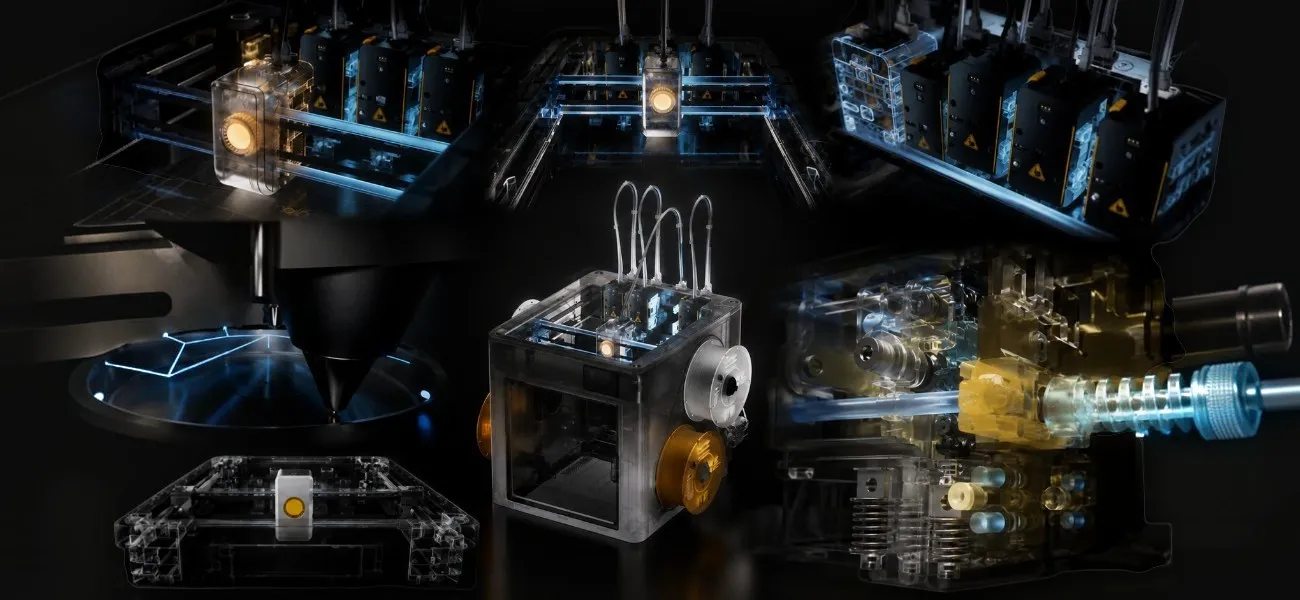
The Snapmaker U1 is equipped with four independent print heads that are automatically swapped during a print job. Each head features a separate filament feed path and its own nozzle. When a specific material is not required, the corresponding module remains parked at its docking station. SnapSwap technology enables switching between colours in approximately 5 seconds. Unlike single-nozzle systems, the printer does not need to completely purge the previous material before starting to print with the next. This is particularly noticeable when producing models with frequent colour changes.
Crisp colour separation
Separate nozzles reduce the risk of filament residue bleeding during colour transitions. Each print head works with its own material, preventing the colour contamination from previous residue typical of single-nozzle systems on the surface of the model.
Reduction in filament waste
In traditional multi-material systems, a portion of the plastic is wasted on nozzle purging and building prime towers. SnapSwap reduces these costs through physical toolhead swapping. According to Snapmaker comparative tests, material consumption in certain multi-colour jobs can be 53–83% lower compared to single-nozzle solutions.
Fewer process pauses
Automatic tool changing takes around 5 seconds. As a result, printing multi-colour models requires less time for material switching. The overall duration of a job depends on the number of transitions, print settings, and geometric complexity.
Multi-material printing with support for engineering plastics
The Snapmaker U1 is equipped with Direct Drive extruders. A maximum nozzle temperature of 300 °C allows working not only with standard PLA and PETG materials, but also with other thermoplastics that require higher extrusion temperatures. Dedicated print heads allow assigning different materials to the primary model and auxiliary support structures. For instance, when printing with compatible materials, water-soluble PVA can be used for supports. Once printing is complete, these supports dissolve in water, simplifying the post-processing of parts with intricate internal cavities and hard-to-reach surfaces. For ABS, ASA, PA, PC, and certain reinforced composites, the specific thermal requirements of the filament must be considered. The optional Top Cover enclosure helps minimise the effect of external air currents, while hardened steel nozzles are designed for printing with abrasive materials. Compatibility and required accessories should be verified for each filament type.
Automatic calibration and print monitoring
The Snapmaker U1 features automatic setup functions that reduce the number of manual operations before printing. The calibration system helps align the positions of the four print heads, while sensors monitor specific equipment operating parameters.
Vibration compensation during high-speed printing
Vibration compensation algorithms adjust the movements of the print head to reduce characteristic ripples on part surfaces. Configuring print parameters via Snapmaker Orca enables accommodating CoreXY kinematics characteristics and selected speed profiles.
Camera-assisted error detection
A built-in camera with computer vision features helps monitor print status and detect specific types of failures. Automated monitoring reduces the need for continuous printer supervision, although it does not eliminate the need to verify settings and equipment condition.
Automatic RFID filament recognition
RFID support allows reading information from compatible Snapmaker spools. Material data simplifies selecting the appropriate print profile and reduces the number of parameters that must be entered manually.
Snapmaker U1 applications for prototyping and production
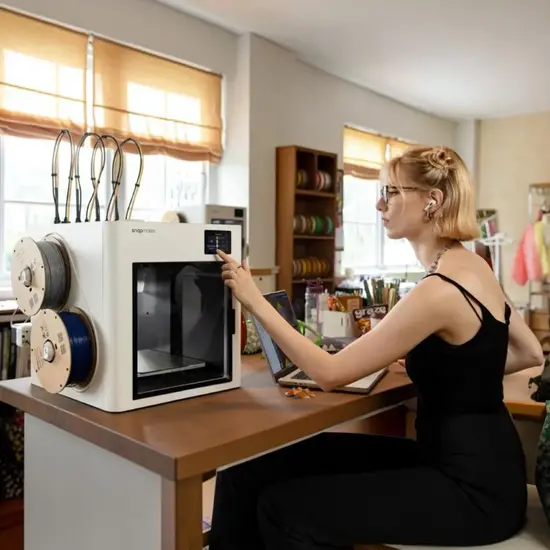
The Snapmaker U1 multi-colour 3D printer is suited for producing models where colour separation, geometric accuracy, and reduced material waste are critical. Four independent extruders make it possible to print complex objects without manual filament changes between individual stages.
Functional prototyping. Fabrication of enclosures, mounts, mechanical components, and test parts to validate designs prior to mass production.
Multi-colour models. Printing objects with contrasting elements, lettering, markings, and decorative details without post-painting.
Educational and display models. Creating models of mechanisms, architectural objects, medical structures, and technical assemblies.
Small-batch production. Manufacturing low-volume batches of enclosures, tooling, accessories, and custom products.
Printing with dedicated supports. Producing parts with complex geometries using compatible materials for the main model and auxiliary support structures.
Snapmaker U1 — demonstration of automatic print head swapping and multi-colour 3D printing.
Snapmaker U1 specifications
Parameter
Value
Print technology
FDM / FFF
Tool changing system
SnapSwap
Kinematics
CoreXY
Build volume
270 × 270 × 270 mm
Number of print heads
4 independent
Print head change time
Approx. 5 s
Maximum print speed
500 mm/s
Maximum acceleration
20 000 mm/s²
Maximum nozzle temperature
300 °C
Maximum bed temperature
110 °C
Calibration accuracy
Under 0.04 mm
X-axis rail material
Carbon fibre
Print materials
PLA, PETG, TPU, PVA, ABS, ASA, PA, PC
Net weight
18.2 kg
Printer dimensions
584 × 499 × 730 mm
Why buy the Snapmaker U1 3D printer?
The Snapmaker U1 combines high print speeds, precision, and economical material usage thanks to four independent print heads and the SnapSwap system. Automatic tool changing cuts filament waste during colour transitions, while CoreXY kinematics ensures productive manufacturing of complex geometry parts. The printer is well-suited for engineering prototyping, multi-colour modelling, and low-volume production. Choose the Snapmaker U1 for efficient multi-material 3D printing with minimal process waste.
Key Parameters
Printing technology
FDM
Max hotend temperature (°C)
up to 300
Build volume (X×Y×Z) (mm)
270х270х270
Features
Accelerometer and Input Signal Generation Calibration | Pressure Lead Calibration | Coordinate Measuring Instrument Calibration
Dimensions netto (mm)
500×480×500
Warranty period (months)
12
3D Printing
Feeder Type
Direct
Filament Diameter (mm)
1.75
Number of Extruders
1 Extruders with 4 print heads
Supported Materials
PLA, TPU, ABS, PVA, PETG, Nylon
Additional Information
Operating Ambient Temperature (°C)
0 - 35
CNC Carving and Cutting
Shank Diameter (mm)
0.5 – 6.35
Hardware & Performance
Platform Material
Flexible Steel Sheet with PEI Surface
Size & Weight
Gross Weight (kg)
20
Gross Dimensions (mm)
580×540×500
Software & Connectivity
Control
3.5-inch 320 × 480 Touchscreen
Connectivity
Wi-Fi, Ethernet
Supported Operating System
Windows: Windows 10 or later *
macOS: macOS 12.0 or later *
Linux: Ubuntu 20.02 or later, and Fedora 36 or later
Reviews
0/ 5
average product rating
Write a review
0
0
0
0
0
There are no reviews for this product. Be the first to leave your review.
No questions about this product, be the first and ask your question.
We use cookies and other tracking technologies to improve the website, personalize content, and analyze traffic. You can adjust your settings in the settings.
Necessary cookies enable core functionality of the website. Without these cookies the website can not function properly.
Statistic cookies help website owners to understand how visitors interact with websites by collecting and reporting information anonymously.
A set of cookies to collect information and report about website usage statistics without personally identifying individual visitors to Google.
Marketing cookies store user data and behavior information, which allows advertising services to target more audience groups.
✕
This website uses cookies
We use cookies and other tracking technologies to improve the website, personalize content, and analyze traffic. You can adjust your settings in the settings.
Necessary cookies enable core functionality of the website. Without these cookies the website can not function properly.
Statistic cookies help website owners to understand how visitors interact with websites by collecting and reporting information anonymously.
A set of cookies to collect information and report about website usage statistics without personally identifying individual visitors to Google.
Marketing cookies store user data and behavior information, which allows advertising services to target more audience groups.