Dual-Laser Metal 3D Printing for Dental Production
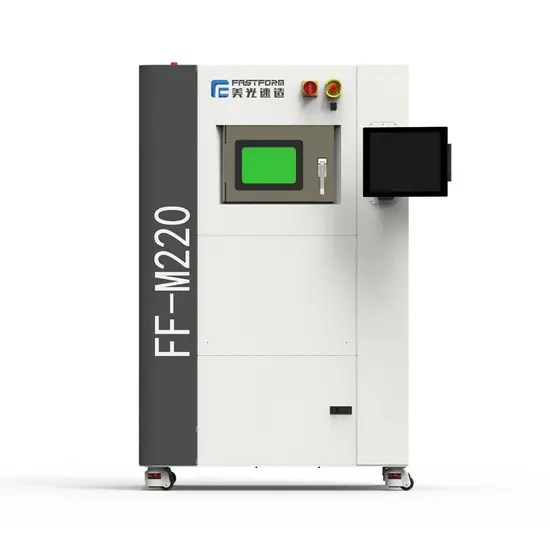
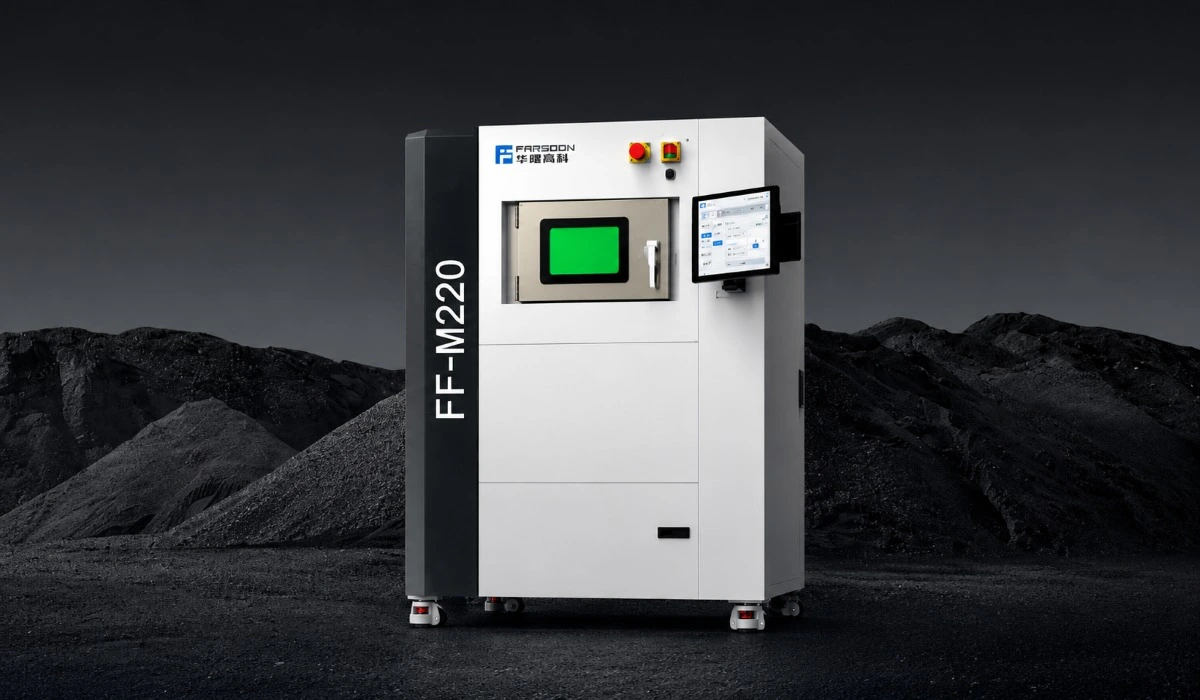
FastForm FF-M220 H is a metal 3D printer equipped with two 500 W fiber lasers, designed for serial production of dental crowns, bridges, denture frameworks, and functional metal parts using Selective Laser Melting (SLM) technology. The 220 × 140 × 200 mm build volume allows several parts to be placed on one platform. The stated productivity is up to 300 dental crowns in 5 hours or 30 frameworks in 6 hours. The printer is suitable for dental laboratories, dental production centers, and companies that use metal powder 3D printing to produce parts with complex shapes.
Advantages of the FastForm FF-M220 H 3D Printer
Two 500 W fiber lasers. The dual-laser system allows laser melting operations to run in parallel within the build area. Dividing tasks between two laser sources helps reduce the time needed to produce batches of metal parts compared with sequential scanning using one laser under similar conditions.
Serial production of dental restorations. The equipment is designed to print up to 300 dental crowns in 5 hours or 30 denture frameworks in 6 hours. Grouping models on the build platform allows production orders to be completed in batches.
Adjustable layer thickness from 20 to 100 µm. The adjustable vertical build step allows printing settings to be selected according to part geometry and metal powder properties. Thinner layers help reduce the visible stair-step effect on sloped surfaces.
Automated model preparation. FastLayer software supports part placement, support structure generation, model slicing, and scan path planning. Automating these operations reduces the amount of manual work required to prepare printing jobs.
Printing parameter monitoring. The monitoring system tracks the Z-axis position, build chamber temperature, pressure, oxygen concentration, and protective gas circulation speed. Monitoring the process environment helps detect changes from the selected operating conditions.
Recovery after power interruptions. The system saves the current printing job and allows the build process to continue after power is restored. The operator can restart printing from the relevant layer after checking the equipment.
SLM Technology and Features of the Dual-Laser System
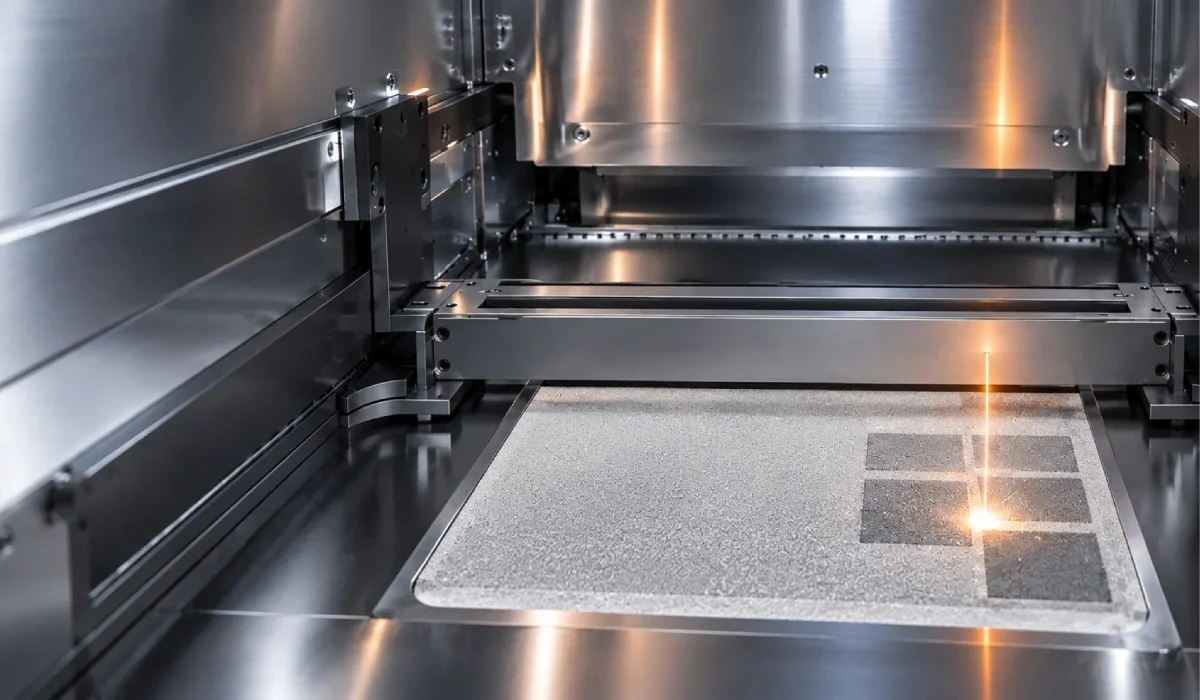
FastForm FF-M220 H uses Selective Laser Melting (SLM) technology, in which metal parts are produced by melting thin layers of powder according to a digital 3D model. Two fiber lasers with a power of 500 W each scan selected areas of the build platform. The laser beam melts the metal powder in specific areas. The material then solidifies and bonds with the previous layer.
The optical system provides a laser spot size of 50–80 µm, while the scanning speed can reach 10 m/s. These parameters are used when setting melting paths according to material properties and part geometry.
Layer-by-layer production makes it possible to create parts with complex external shapes, internal cavities, and geometric features that are difficult to produce using traditional machining methods. Support structures may be required for overhanging areas and certain geometries.
Build Volume and 3D Printing Accuracy
The 220 × 140 × 200 mm build volume allows several dental restorations or metal parts to be produced at the same time, depending on their dimensions, orientation, and support structures. Printing accuracy and quality are supported by the following technical parameters:
Printing accuracy of ±0.1 mm for parts up to 100 mm. For parts larger than 100 mm, accuracy is ±0.1% of the relevant dimension.
Layer thickness of 20–100 µm. Defines the vertical build step and affects the number of layers and the quality of sloped surfaces.
Laser spot size of 50–80 µm. Describes the size of the area affected by the laser beam on the powder layer.
Maximum heating temperature of 200 °C. The heating system allows temperature settings to be adjusted according to the printing process.
The accuracy of finished parts depends not only on the laser system parameters but also on powder properties, scanning strategy, model orientation, and post-processing conditions.
3D Printing Productivity for Dental Frameworks and Prostheses
The FastForm FF-M220 H dental 3D printer with two lasers can produce up to 300 metal crowns in 5 hours or 30 denture frameworks in 6 hours. Automated model arrangement supports efficient use of the build platform during serial SLM printing. Actual productivity depends on part geometry, layer thickness, metal powder properties, and printing parameters. The complete production process also includes cooling, cleaning, and post-processing of finished parts.
Metal Powder Feeding and Even Layer Distribution System
To form powder layers, the FF-M220 H is equipped with a top powder feeding system and a servo-driven powder distribution mechanism. A flexible recoater with a polyurethane working element spreads metal powder across the build surface. The recoater blade is designed to work in contact with the powder layer and distribute it before the next laser melting cycle.
The maximum powder loading capacity is 7 L. The system allows the operator to monitor the amount of material and adjust powder feeding parameters. Powder level monitoring includes a warning when the material level is too low. This helps operators maintain enough powder for long production jobs.
Software for SLM 3D Printing
Digital model preparation and metal 3D printer control are performed using FastLayer and FastFab software.
FastLayer for Model Preparation and Scan Path Planning
FastLayer is designed to process STL models, arrange them in the build area, and prepare data for layer-by-layer production. The main software features include:
Importing, transforming, and automatically repairing STL models.
Automated arrangement of parts on the build platform.
Preparing models for layer-by-layer production.
Planning laser scanning paths.
Using different scanning strategies, including chessboard, hexagonal, octagonal, and parallel patterns.
Adjusting laser power, scanning speed, layer thickness, and other process parameters.
Working with a library of material parameters.
Different scanning strategies allow the printing process to be adapted to part geometry and the metal powder being used.
FastFab for Printing Control and Equipment Monitoring
FastFab controls the build process, displays current parameters, and monitors production jobs.
The software allows users to:
Import prepared printing data.
View the total number of layers and the current build stage.
Monitor temperature, pressure, and oxygen concentration inside the build chamber.
Track printing progress and the estimated job completion time.
Record process parameters and export data.
Switch between automatic and manual control.
Receive notifications about errors and parameter changes.
Resume printing after an interruption.
The equipment is operated through a touchscreen interface.
Protective Atmosphere and Gas Circulation System
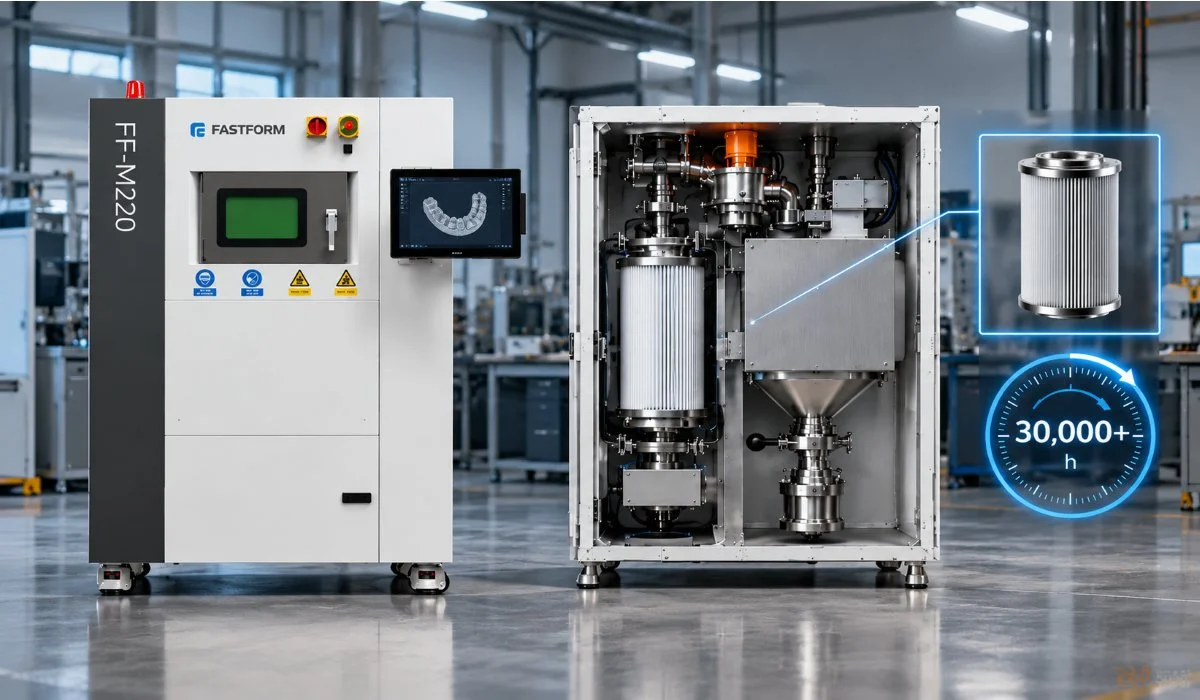
The FastForm FF-M220 H SLM 3D printer operates in a protective nitrogen or argon atmosphere, which limits contact between molten metal and oxygen during laser powder melting. The gas supply requires a purity of more than 99.99% and a pressure above 0.5 MPa. The choice of protective gas depends on the material properties. The built-in monitoring system measures oxygen concentration in the build chamber with a sensitivity of up to 100 ppm. Gas circulation removes particles and aerosols produced during printing, while a multi-stage filtration system cleans the gas flow. The filter element has a service life of at least 30,000 hours, reducing the need for regular filter replacement.
Metal Powders for FastForm FF-M220 H
The FastForm FF-M220 H metal 3D printer supports different groups of metal powders for dental and industrial applications. Compatible material groups include:
Cobalt-chromium alloys (CoCr). Used to produce metal bases for dental crowns, bridges, and denture frameworks. They offer high stiffness, strength, and corrosion resistance.
Titanium alloys. Used for components that require high strength-to-weight ratio, low weight, and corrosion resistance. They are suitable for certain dental and technical parts when the material meets the requirements of the intended application.
Stainless steel. Used to produce functional parts, fasteners, housing components, and manufacturing tools.
Tool steels. Used to produce metal components that require specific mechanical properties after suitable heat treatment.
Aluminum alloys. Used for parts where low weight and suitable structural properties are important.
Copper alloys. Suitable for technical components that require high thermal or electrical conductivity, depending on the alloy composition.
High-entropy alloys. Can be used for research and specialized production applications when suitable printing parameters are available.
Verified printing settings must be used for each type of metal powder. The production of dental parts also depends on material biocompatibility requirements and the intended use of the finished restoration.
Applications of the Metal 3D Printer
The build volume, dual-laser system, and support for different metal powders make the equipment suitable for dental production and manufacturing compact industrial parts. Main applications include:
Dental laboratories. Serial printing of metal crowns, denture frameworks, and bridges.
Dental production centers. Manufacturing batches of custom dental restorations from digital models.
Medical manufacturing. Producing selected metal components from materials that meet the required specifications.
Mechanical engineering. Printing housing parts, fasteners, brackets, and functional components with complex geometry.
Tool manufacturing. Producing manufacturing tools and individual tool components.
Research and development. Creating metal prototypes, testing designs, and developing additive manufacturing parameters.
FastForm FF-M220 H Technical Specifications
SLM Printing and Laser System Parameters
Parameter
Value
Printing technology
SLM, Selective Laser Melting
Build volume
220 × 140 × 200 mm
Number of lasers
2
Laser type
Fiber laser
Laser power
2 × 500 W
Laser spot size
50–80 µm
Layer thickness
20–100 µm
Laser scanning speed
0–10 m/s
Printing accuracy for parts up to 100 mm
±0.1 mm
Printing accuracy for parts over 100 mm
±0.1% of dimension
Maximum heating temperature
200 °C
Recoater type
Flexible
Recoater blade material
Polyurethane
Powder feeding system
Top feeding
Maximum powder loading capacity
7 L
Build plate attachment
Quick-release
Print recovery after power loss
Yes
Dimensions and Operating Specifications
Parameter
Value
Power supply
220 V, single-phase
Average power consumption
2.5 kW
Cooling system
Water cooling
Protective gas
Nitrogen or argon
Required gas purity
Above 99.99%
Gas supply pressure
Above 0.5 MPa
Gas consumption
≤1 L/min
Minimum measurable oxygen concentration
≤100 ppm
Filtration system
Permanent, circulation-based
Filter service life
≥30,000 hours
Operating room temperature
18–28 °C
Relative humidity
≤75%
Recommended installation area
2.5 × 2 m
Minimum floor load capacity
500 kg/m²
Net dimensions
1200 × 750 × 1820 mm
Net weight
550 kg
Buy the FastForm FF-M220 H Metal 3D Printer
Order the FastForm FF-M220 H metal 3D printer for serial production of dental crowns, denture frameworks, bridges, and functional metal parts using SLM technology. Our specialists will provide advice on technical specifications, metal powder compatibility, equipment configuration, installation requirements, and delivery conditions.
We use cookies and other tracking technologies to improve the website, personalize content, and analyze traffic. You can adjust your settings in the settings.
Necessary cookies enable core functionality of the website. Without these cookies the website can not function properly.
Statistic cookies help website owners to understand how visitors interact with websites by collecting and reporting information anonymously.
A set of cookies to collect information and report about website usage statistics without personally identifying individual visitors to Google.
Marketing cookies store user data and behavior information, which allows advertising services to target more audience groups.
We use cookies and other tracking technologies to improve the website, personalize content, and analyze traffic. You can adjust your settings in the settings.
Necessary cookies enable core functionality of the website. Without these cookies the website can not function properly.
Statistic cookies help website owners to understand how visitors interact with websites by collecting and reporting information anonymously.
A set of cookies to collect information and report about website usage statistics without personally identifying individual visitors to Google.
Marketing cookies store user data and behavior information, which allows advertising services to target more audience groups.




.jpg)