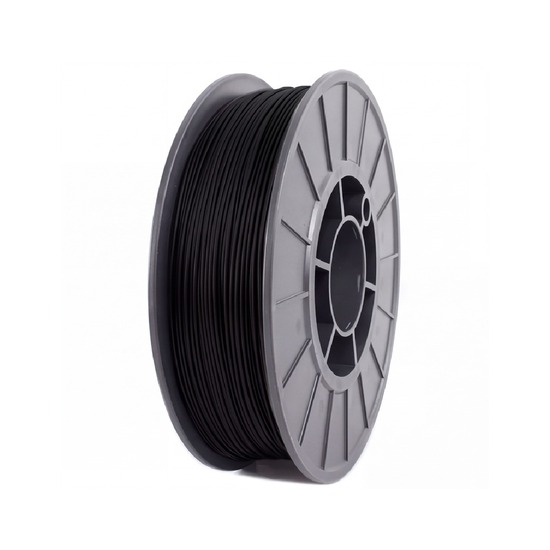
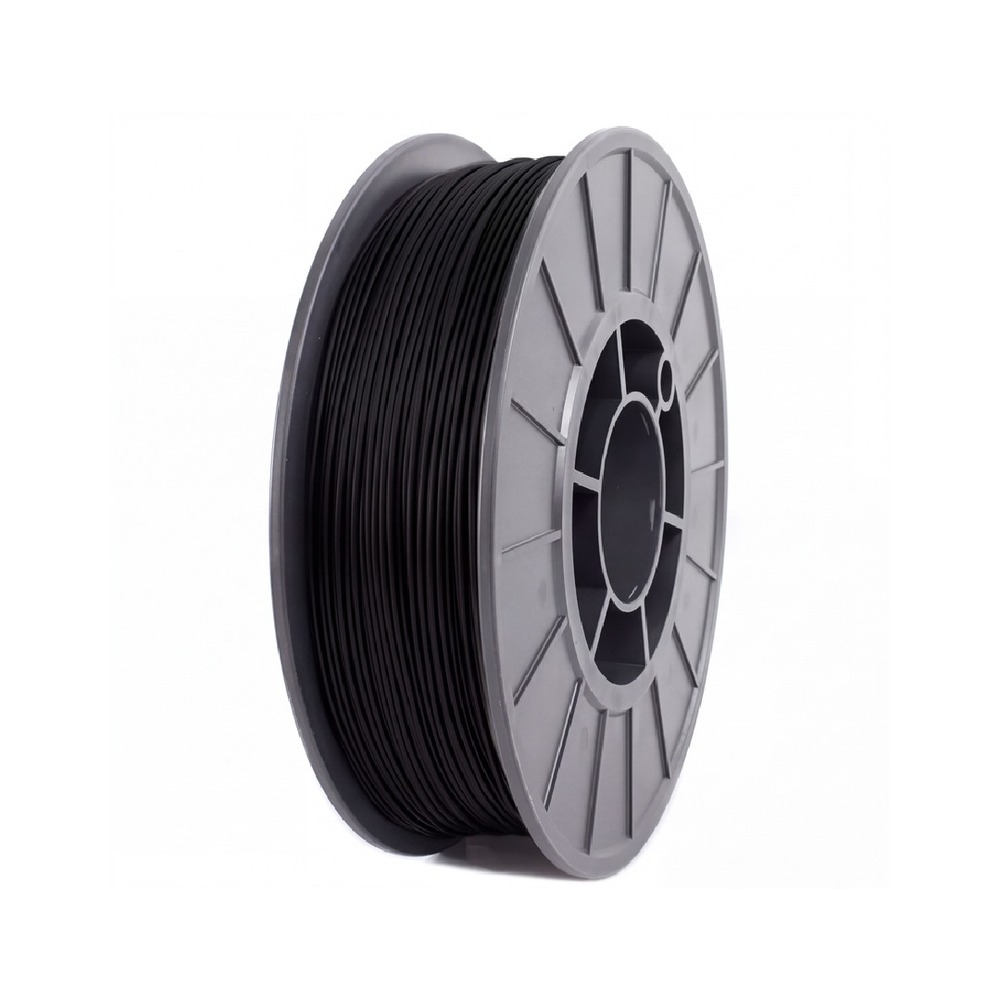
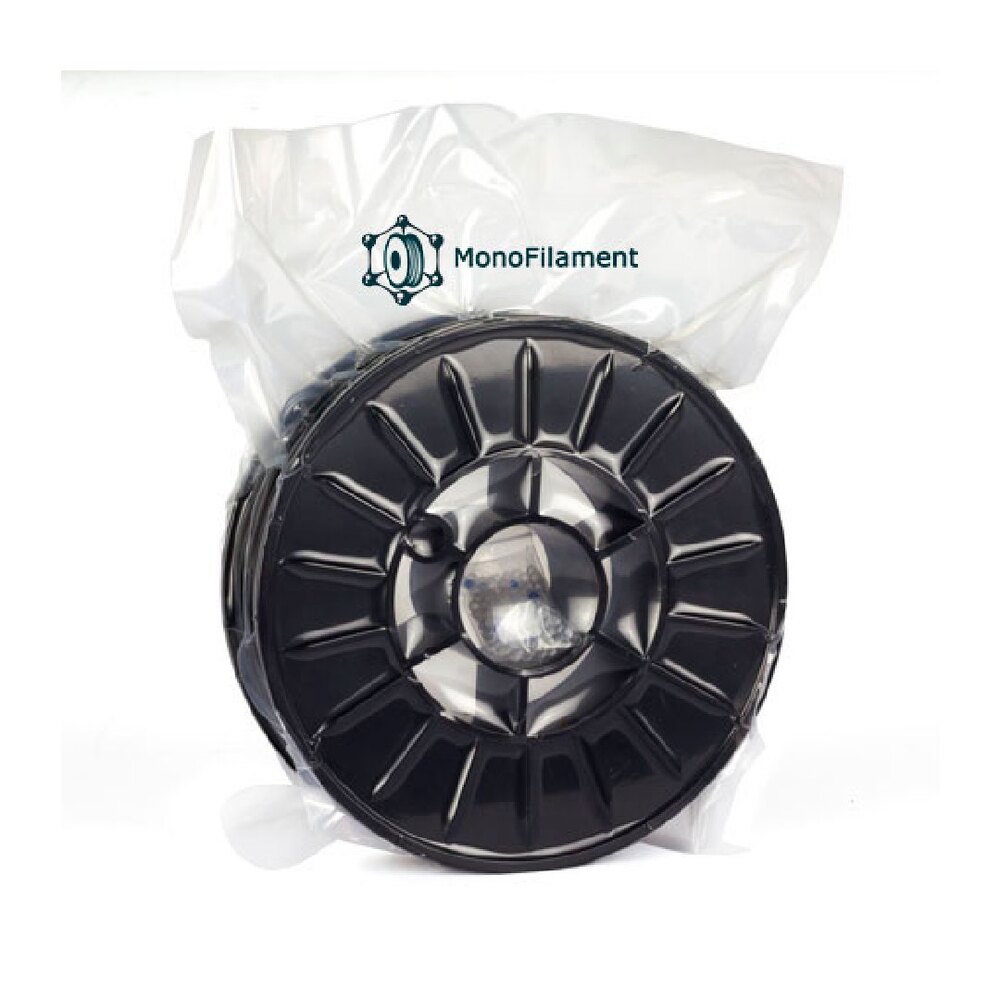
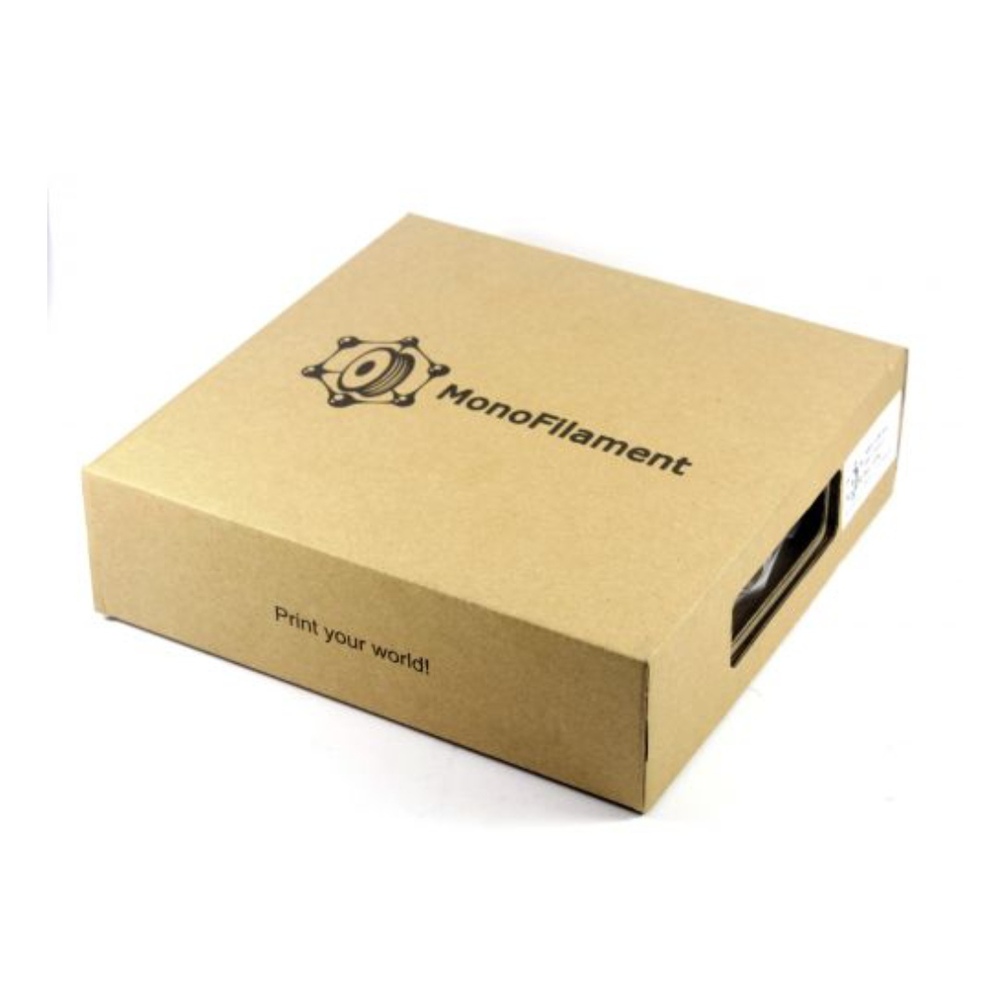
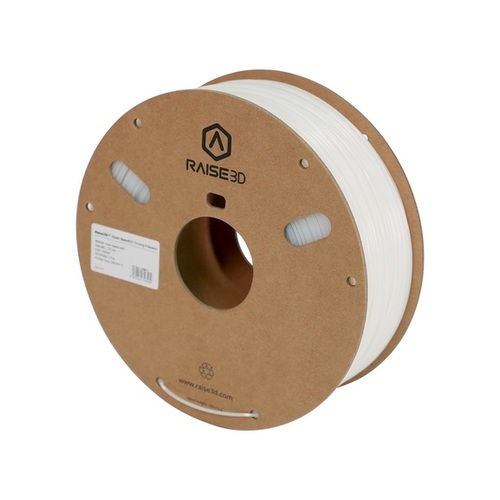
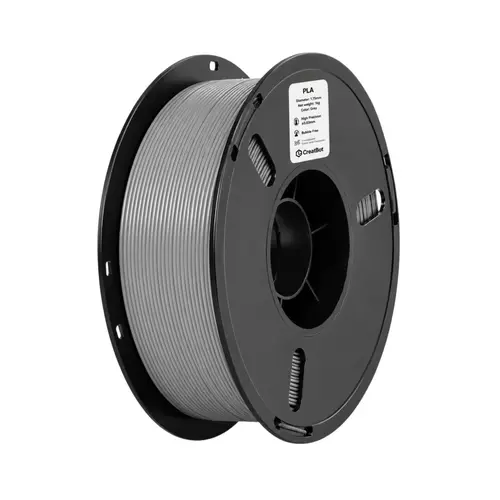
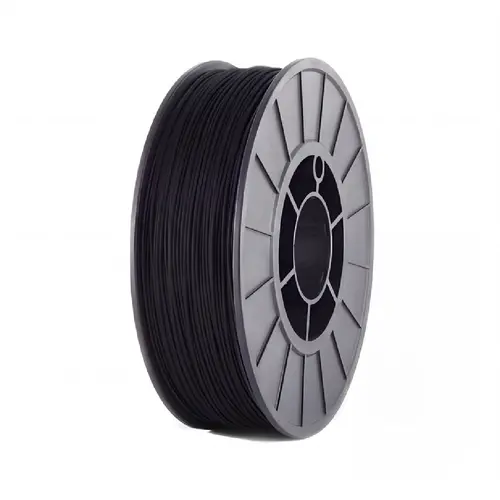
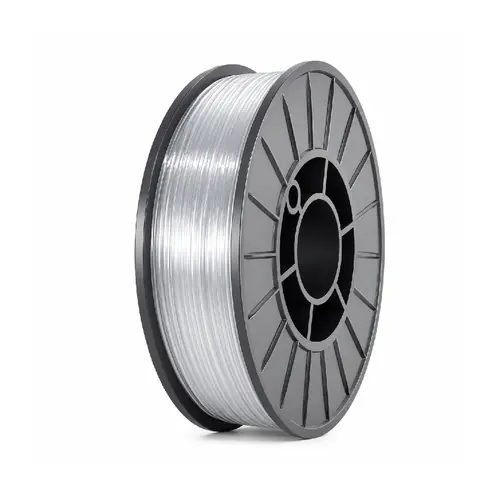
TPU 80A filament MonoFilament 1.75 mm 0.75 kg Black
Flexible TPU 80A MonoFilament Black Filament
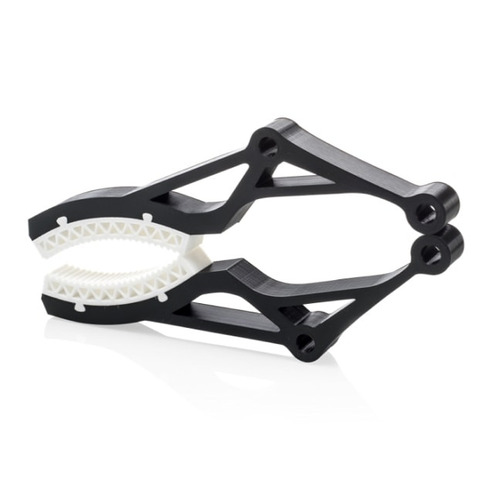
TPU 80A MonoFilament is an elastic thermoplastic polyurethane designed for FDM 3D printing of parts that require high flexibility, resilience, and resistance to mechanical wear. With a Shore hardness of 80A, this material is suitable for manufacturing soft components that can withstand repeated bending, deformation, and impact loads. Good interlayer adhesion helps produce durable parts, including seals, shock-absorbing elements, protective covers, and flexible housing components.
Material Advantages
Resistance to mechanical abrasion. TPU 80A withstands regular friction and contact with working surfaces, allowing printed components to retain their functional properties for longer.
Chemical resistance. The material is resistant to technical greases, lubricants, fuels, and most solvents, expanding its range of applications in technical products.
Wide operating temperature range. Printed parts can be used at temperatures ranging from -40 °C to +140 °C while retaining their key performance characteristics.
High-quality surface finish and convenient printing. The filament produces smooth, glossy surfaces on finished models. During printing, the material emits virtually no noticeable odor.
High elasticity. Its low Shore hardness makes it possible to create soft, flexible structures that adapt to mechanical loads and repeated deformation.
Applications
Automotive industry and technical equipment. Printing seals, dampers, anti-vibration inserts, flexible couplings, and protective covers for various mechanisms.
Mechanical assemblies and moving structures. Manufacturing drive belts, rollers, elastic joints, and other components designed to operate under continuous movement and deformation.
Protective components and accessories. Creating soft cases, shock-absorbing elements, housings, and covers for electronic devices, tools, and equipment.
Sports and household products. Manufacturing flexible fasteners, retainers, footwear components, and other accessories that require resilience and abrasion resistance.
Compatibility with Materials and 3D Printers
Printing technology. TPU 80A filament is designed for FDM/FFF 3D printing. For consistent results, a Direct Drive extruder is recommended, as it provides more precise feeding of the flexible filament.
3D printer compatibility. The material can be used with open-frame and enclosed 3D printers that support flexible filaments with a diameter of 1.75 mm. For complex and large models, equipment with an enclosed build chamber is recommended.
Recommended printing speed. A speed of 20–30 mm/s is recommended to ensure consistent feeding of the flexible material and reduce the risk of extrusion issues.
Build plate considerations. Due to TPU's strong adhesion to glass and PEI-coated surfaces, it is recommended to use heat-resistant glue as a release layer to make it easier to remove finished parts.
Technical Specifications
Parameter
Value
Material type
TPU
Shore hardness
80A
Color
Black
Printing technology
FDM / FFF
Filament diameter
1.75 ± 0.05 mm
Recommended nozzle temperature
225–245 °C
Build plate temperature
20–60 °C
Printing speed
20–30 mm/s
Part cooling
Required
Extruder type
Direct Drive recommended
Printer type
Open-frame / enclosed
Mechanical Properties
Parameter
Value
Material density
1.20 g/cm³
Operating temperature range
-40 – +140 °C
Water absorption after 24 hours at 23 °C
0.6 %
Abrasion resistance
High
Chemical resistance
Technical greases, lubricants, fuels, most solvents
Physical Properties
Parameter
Value
Filament diameter
1.75 ± 0.05 mm
Permissible ovality
± 0.02 mm
Linear mass
325–340 m/kg
Surface finish of the printed part
Smooth, glossy
Storage and Usage Recommendations
Protect the filament from moisture. TPU is a hygroscopic material that can actively absorb moisture from the air. Airtight vacuum containers are recommended for storing filament spools. If the material has absorbed moisture, dry it for 12–16 hours at a temperature of 60–70 °C before printing. This helps reduce bubble formation during extrusion, stringing between separate model elements, and the risk of degraded properties in finished parts.
Consider the material's adhesion to the build plate. The filament has strong adhesion to glass surfaces and PEI coatings. To prevent damage to the build plate when removing a model, use heat-resistant glue as an intermediate release layer. The recommended build plate temperature is 20–60 °C.
Buy TPU 80A MonoFilament Black
Order TPU 80A MonoFilament for your manufacturing or household projects. Our specialists can help you choose the right filament, advise on compatibility with your 3D printer, and recommend suitable printing settings.
Key Parameters
Printing technology
FDM
Max print speed (mm/s)
20-30
Max bed temperature (°C)
20-60
Country of origin
Ukraine
Weight netto (kg)
0.75
3D Printing
Filament Diameter (mm)
1.75
Material Parameters
Color
Black
Printing Temperature (°C)
225-245
Reviews
0/ 5
average product rating
Write a review
0
0
0
0
0
There are no reviews for this product. Be the first to leave your review.
No questions about this product, be the first and ask your question.
We use cookies and other tracking technologies to improve the website, personalize content, and analyze traffic. You can adjust your settings in the settings.
Necessary cookies enable core functionality of the website. Without these cookies the website can not function properly.
Statistic cookies help website owners to understand how visitors interact with websites by collecting and reporting information anonymously.
A set of cookies to collect information and report about website usage statistics without personally identifying individual visitors to Google.
Marketing cookies store user data and behavior information, which allows advertising services to target more audience groups.
✕
This website uses cookies
We use cookies and other tracking technologies to improve the website, personalize content, and analyze traffic. You can adjust your settings in the settings.
Necessary cookies enable core functionality of the website. Without these cookies the website can not function properly.
Statistic cookies help website owners to understand how visitors interact with websites by collecting and reporting information anonymously.
A set of cookies to collect information and report about website usage statistics without personally identifying individual visitors to Google.
Marketing cookies store user data and behavior information, which allows advertising services to target more audience groups.