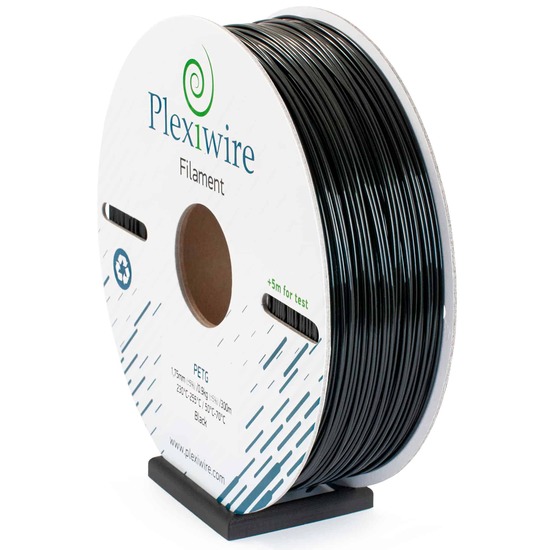
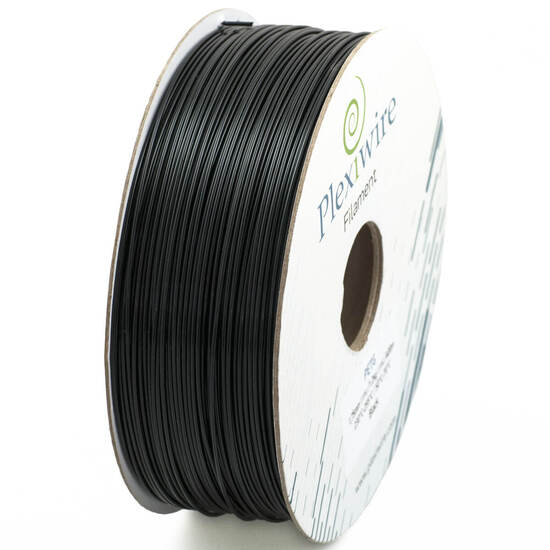
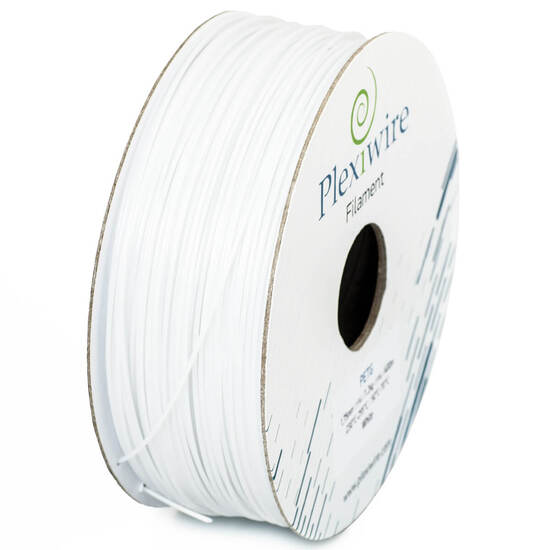
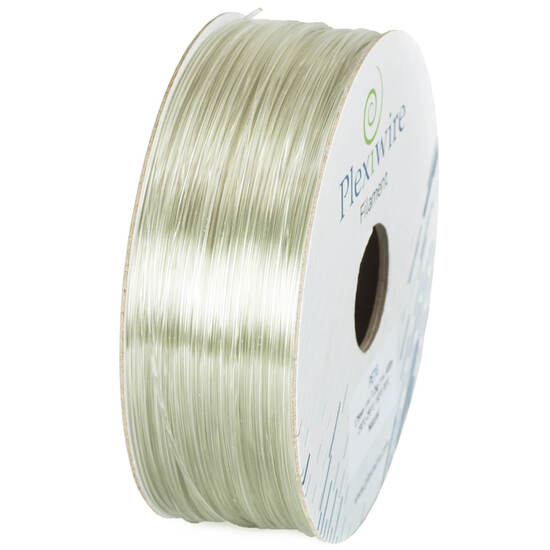
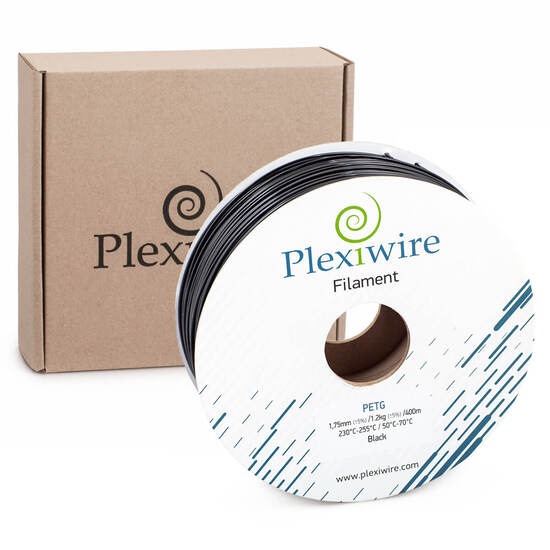
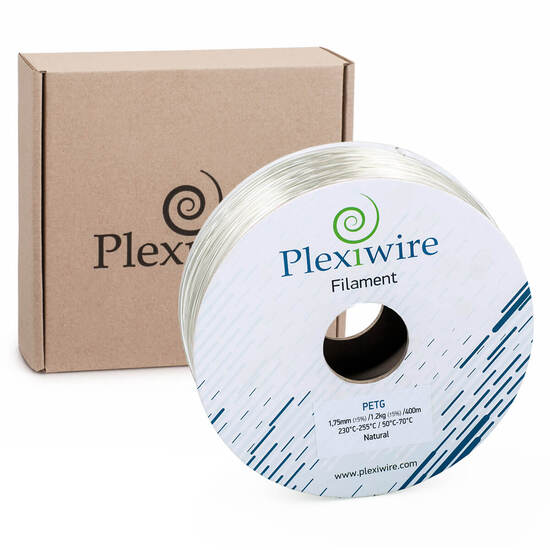
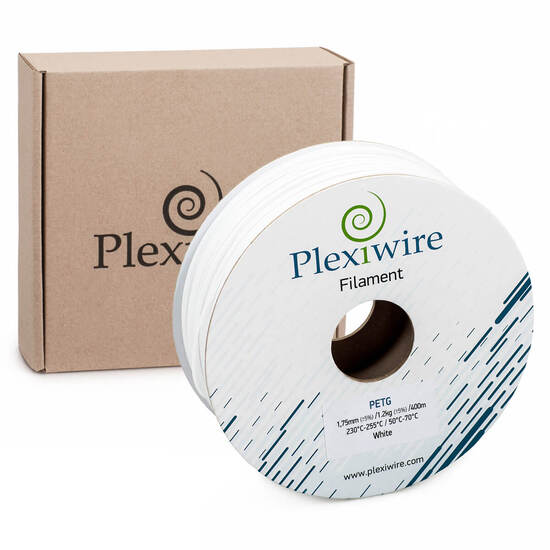
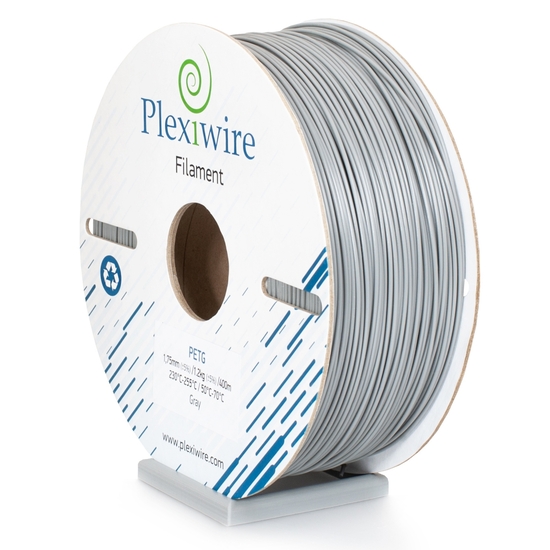
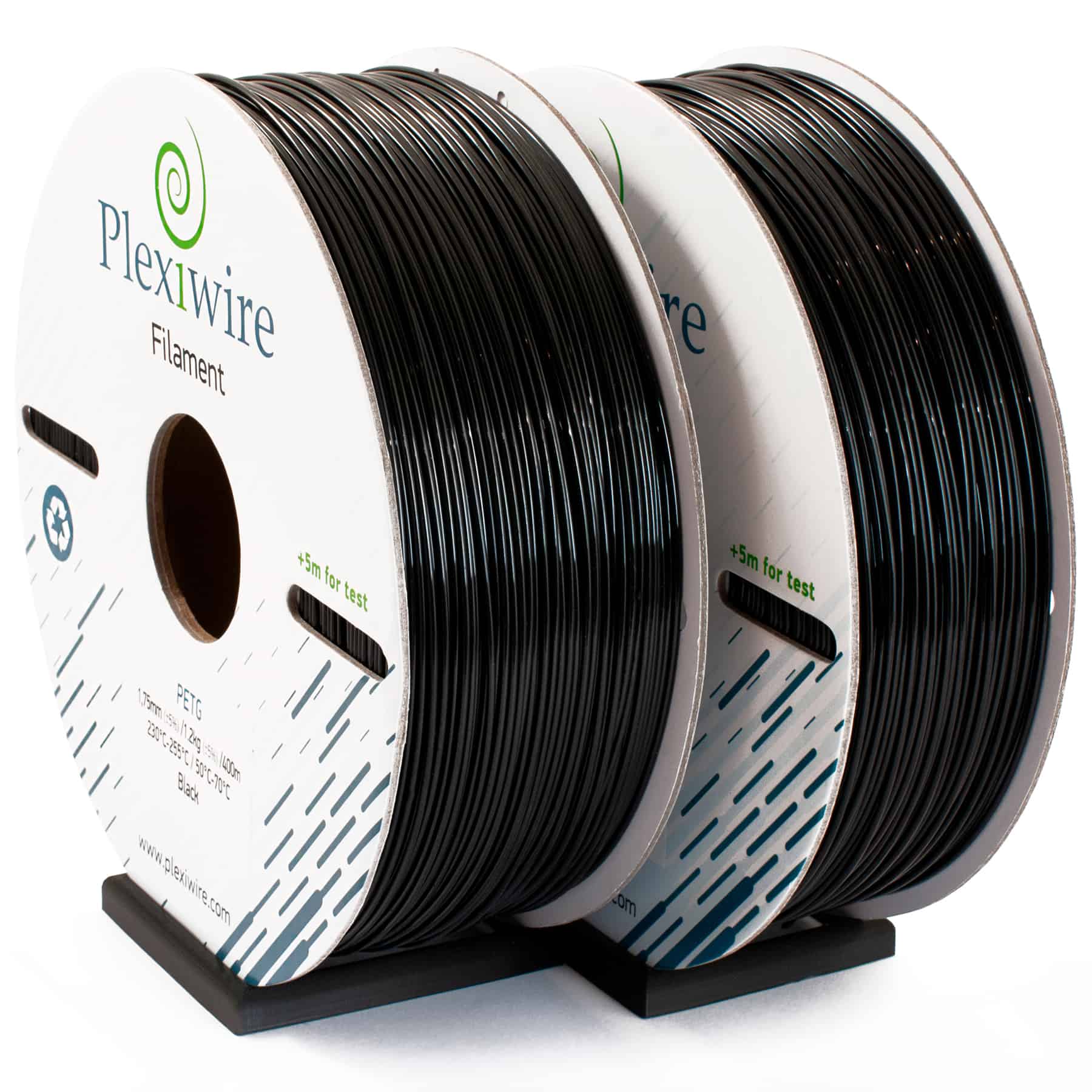
PETG plastic Plexiwire is a modified version of the well-known engineering PET plastic, enhanced with glycol added to the base material (polyethylene terephthalate). This modification creates a material with distinct properties. PETG does not crystallize upon heating due to its more amorphous structure. It is more durable, heat-resistant, and long-lasting than regular PET plastic. While it shares some properties with ABS filament, PETG is as easy to work with as PLA.
Plexiwire PETG is becoming increasingly popular and affordable as a material for 3D printing. With the proper print settings, PETG filament is easy to print, offering excellent layer adhesion without emitting strong odors or toxic fumes. Additionally, it has very low shrinkage, improving print accuracy and allowing for the production of large parts. PETG is also extremely robust, highly resistant to chemicals, and can withstand high temperatures. It is ideal for creating food-safe objects or parts that require exceptional strength. PETG is non-degradable and UV-resistant, making it suitable for outdoor use. Many consider it a perfect blend of PLA and ABS properties. When printing with Plexiwire PETG, you get stronger and more accurate parts compared to ABS, but PETG does not degrade in corrosive environments or in the air like PLA-based materials.
Applications
PETG plastic is easy to print and chemically resistant, making it versatile for a variety of applications. It is commonly used for creating food containers and liquid storage. PETG is also widely used in medicine: its rigid structure allows it to withstand stringent sterilization processes, making it perfect for medical implants and pharmaceutical packaging. Additionally, its resistance to aggressive substances makes it useful in moving mechanisms, which is why it is frequently applied in robotics.
Recommendations for 3D printing with PETG plastic Plexiwire
Active ventilation
To ensure high-quality 3D prints, it is essential to use active ventilation. This will help avoid streaks and stringing. You can turn off the fan for the first layer to improve adhesion.
Nozzle cleanliness
Set the retraction level properly to prevent excess plastic drips. If drips form, pause the print, remove them, and resume from the last point.
Surface cleanliness
Always clean the print bed before starting each print to ensure easy removal of the printed model without damage.
Humidity of plastic
PETG is hygroscopic and can absorb moisture. It must be dried properly before printing and stored according to manufacturer guidelines. Otherwise, excessive moisture absorption will lead to poor print quality.
Buy PETG filament Plexiwire 1,75 mm / 300 m / 0,9 kg in Ukraine
Key Parameters
Tensile strength (MPa)
50
Heat deflection temperature (°C)
up to 70
Filament parameters
Material category
Standard
Material
PETG
Material weight (kg)
0.9
High-speed
No
Improved
No
With additive
No
Flexible
No
UV resistance
No
Lightweight
No
Strong
Yes
Support materials
No
Diameter
1.75
Density
1.27
Impact strength
7
Flexural modulus
2.1
Print temperature
230-250
Bed temperature
70-85
Print speed
30-150
Reviews
0/ 5
average product rating
Write a review
0
0
0
0
0
There are no reviews for this product. Be the first to leave your review.
No questions about this product, be the first and ask your question.
We use cookies and other tracking technologies to improve the website, personalize content, and analyze traffic. You can adjust your settings in the settings.
Necessary cookies enable core functionality of the website. Without these cookies the website can not function properly.
Statistic cookies help website owners to understand how visitors interact with websites by collecting and reporting information anonymously.
A set of cookies to collect information and report about website usage statistics without personally identifying individual visitors to Google.
Marketing cookies store user data and behavior information, which allows advertising services to target more audience groups.
We use cookies and other tracking technologies to improve the website, personalize content, and analyze traffic. You can adjust your settings in the settings.
Necessary cookies enable core functionality of the website. Without these cookies the website can not function properly.
Statistic cookies help website owners to understand how visitors interact with websites by collecting and reporting information anonymously.
A set of cookies to collect information and report about website usage statistics without personally identifying individual visitors to Google.
Marketing cookies store user data and behavior information, which allows advertising services to target more audience groups.